
1. GFRP Rebars & Stirrups
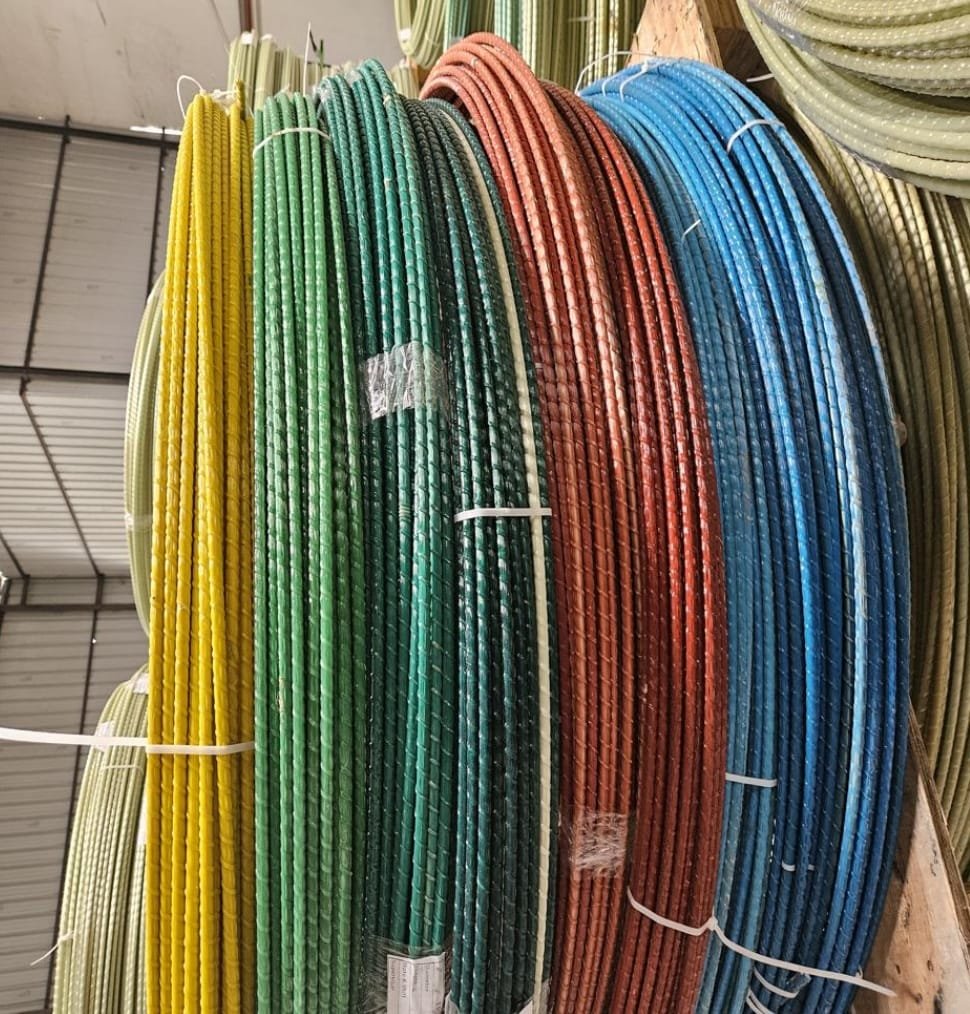
Glass Fiber Reinforced Polymer (GFRP) Rebars & Stirrups are advanced construction materials designed to replace conventional steel reinforcement. Made from high-strength glass fibers embedded in a polymer matrix, they provide superior tensile strength, corrosion resistance, and long-term durability.
Unlike steel, GFRP does not rust, making it ideal for marine structures, bridges, coastal projects, chemical plants, and water treatment facilities where exposure to moisture, salts, or chemicals is unavoidable. Their lightweight nature makes them 4x easier to transport, handle, and install, reducing labor costs and improving site efficiency.
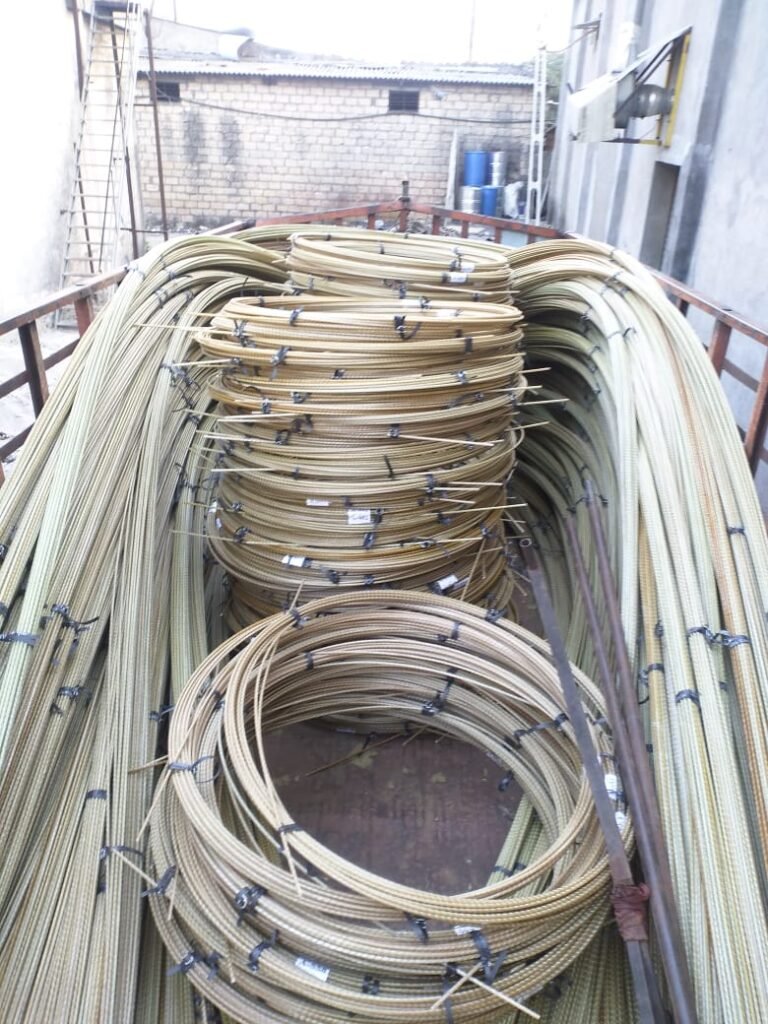
Manufacturing
GFRP Rebars & Stirrups are manufactured using high-strength glass fibers combined with a polymer resin such as epoxy or vinyl ester. The production process generally follows the pultrusion method, where continuous glass fibers are pulled through a resin bath to ensure complete impregnation. These resin-coated fibers are then passed through a heated die, where they are shaped, cured, and hardened under controlled temperature and pressure.
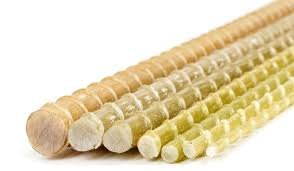
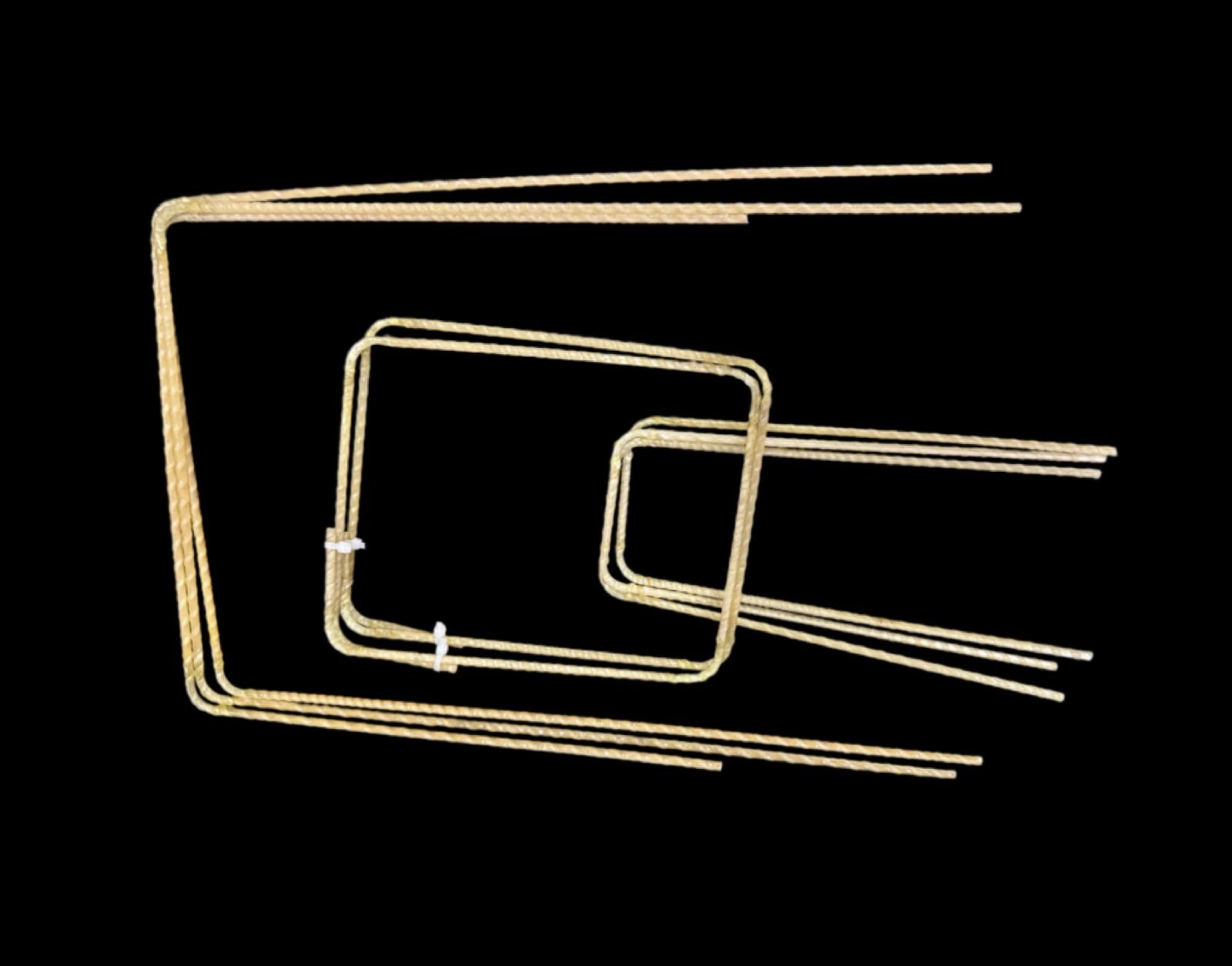
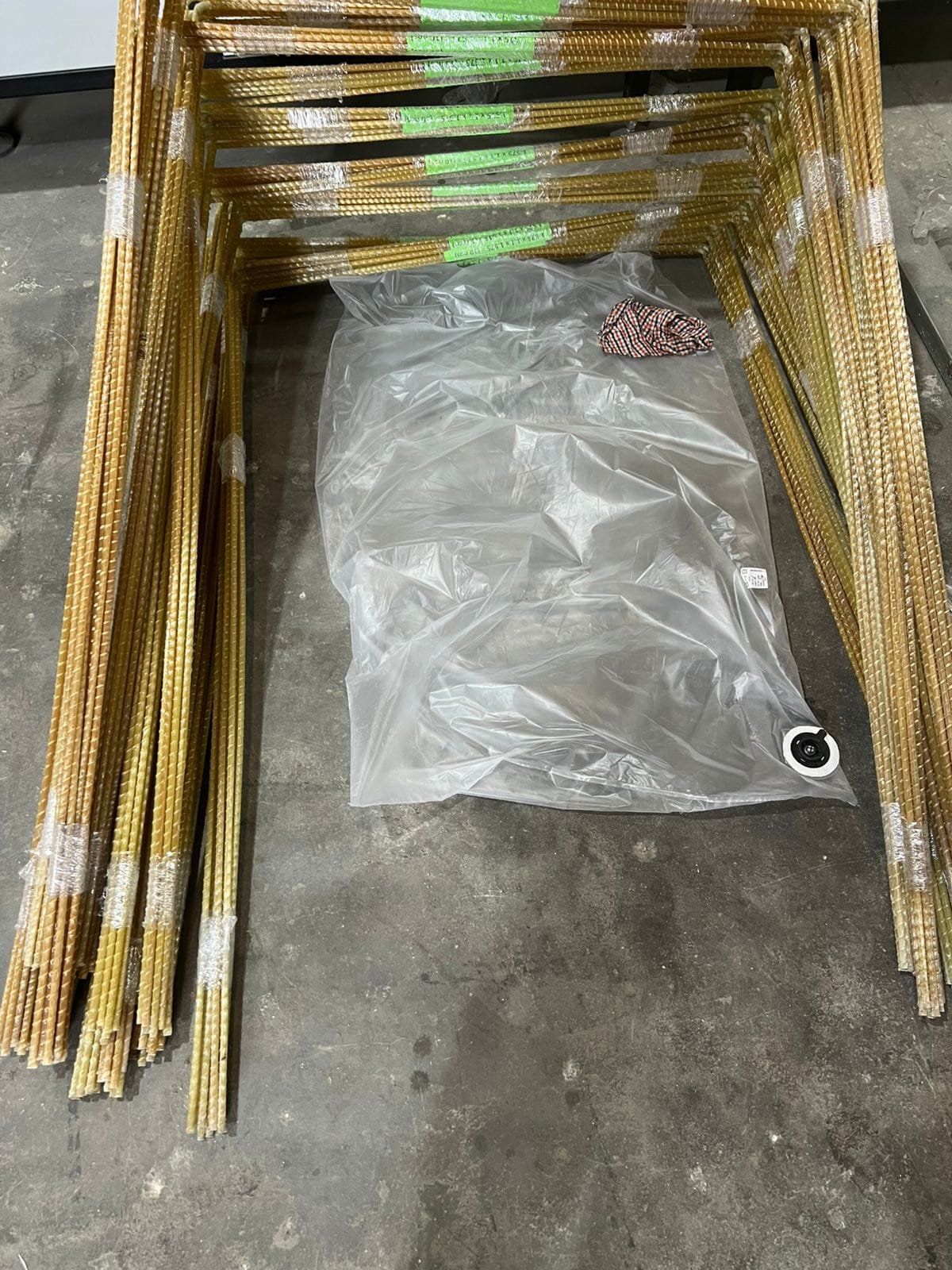
To improve bonding with concrete, the bars are given a ribbed or helically wound surface and sometimes coated with quartz sand. After curing, the rebars are cooled and cut into standard or customized lengths. Stirrups and bent shapes are made by heating and bending the cured rebars using special machines that maintain structural strength.
Every batch undergoes strict quality control tests to check tensile strength, bond performance, and durability, following international standards such as ACI 440.6, ASTM D7205, and CSA S807. This ensures that the final product is lightweight, corrosion-resistant, strong, and reliable for long-term structural use.
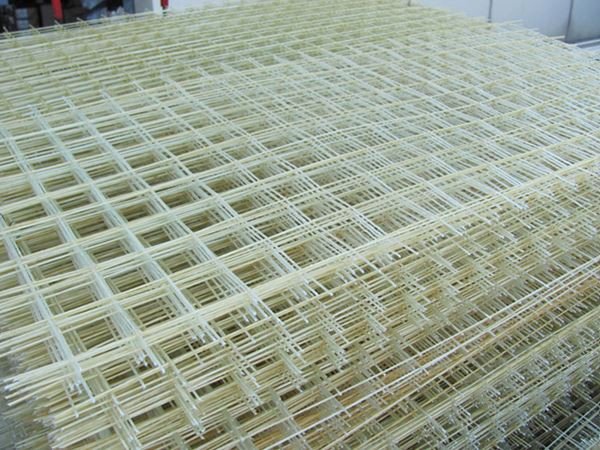
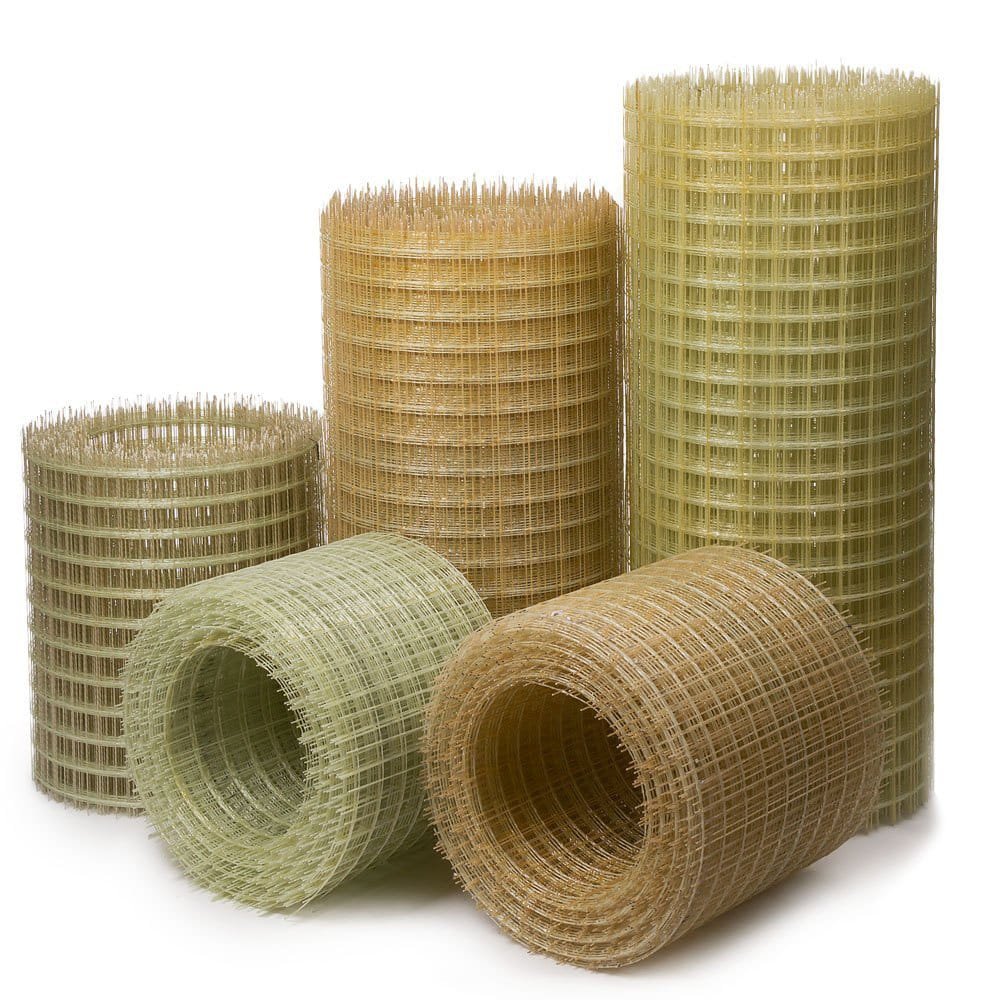
Applications
- Reinforcement in bridges, coastal & marine structures
- Roads, pavements, and tunnels
- Water treatment plants & chemical industries
- Foundations and retaining walls
- Any structure exposed to moisture, salts, or chemicals
Key Reasons to Choose GFRP Rebars & Stirrups
Zero Corrosion
Perfect for coastal, wet & chemical-prone areas
Lightweight
Saves labor & transport cost, easy handling on site
Non-Conductive
Safer for electrical, medical & sensitive environments
Flexible & Crack-Resistant
Improves structural life & reduces repairs